
Lenses of CCTV
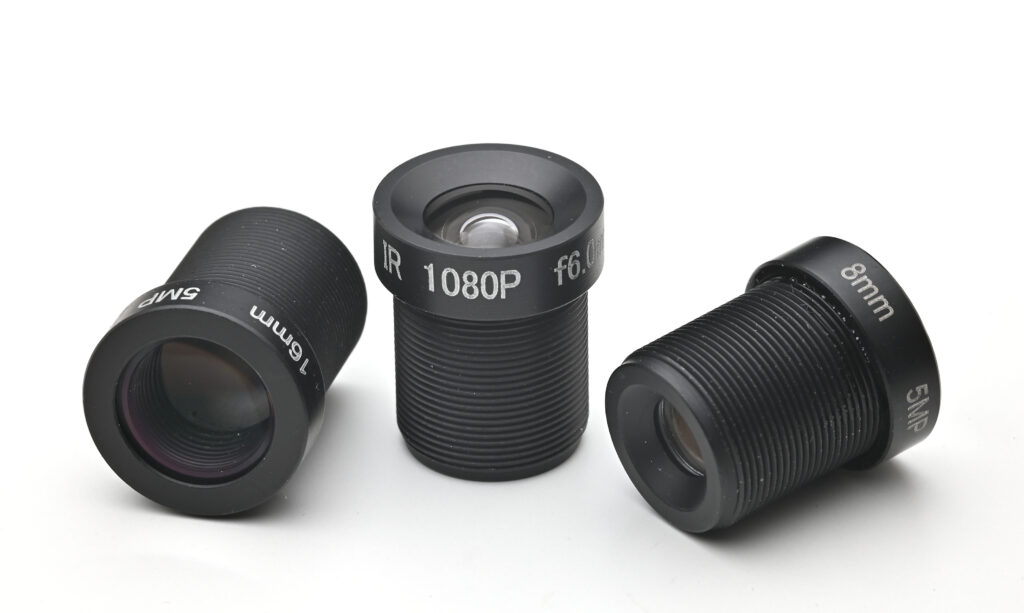
When setting up a Closed-Circuit Television (CCTV) system, many factors need to be considered to ensure optimal performance, one of the most critical being the lens. The lens is the eye of your CCTV camera; it determines how much area is covered, the level of detail captured, and the overall quality of the footage. In this article, we will explore the different types of CCTV lenses, their features, and how they affect the functionality of your surveillance system.
What Are CCTV Lenses?
A CCTV lens focuses light onto the camera’s image sensor, enabling it to capture the scene. The choice of lens impacts the field of view, zoom capabilities, and the clarity of objects at varying distances. CCTV lenses can either make or break the effectiveness of a security system, as the wrong lens may leave critical areas unmonitored or produce blurry footage that is unusable.
Key Features of CCTV Lenses
To understand CCTV lenses better, it’s important to grasp some key concepts:
- Focal Length: This refers to the distance between the lens and the image sensor, measured in millimeters (mm). It determines the camera’s field of view (FoV). Shorter focal lengths (e.g., 2.8mm) provide a wide-angle view, while longer focal lengths (e.g., 12mm) offer a narrow but more focused view.
- Aperture: Measured as an f-number (e.g., f/2.0), the aperture controls the amount of light entering the lens. A lower f-number indicates a larger aperture, allowing more light, which is ideal for low-light conditions.
- Iris: The iris regulates the amount of light reaching the image sensor. It can be fixed, manual, or automatic (varifocal), depending on the lens type.
Types of CCTV Lenses
CCTV lenses come in a variety of types, each suited to specific applications. Below is a detailed breakdown of the most common lens types:
1. Fixed Lenses
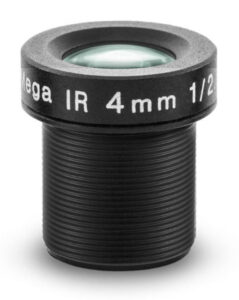
Fixed lenses have a set focal length, meaning the field of view cannot be adjusted. These lenses are simple, cost-effective, and commonly used in environments where a consistent view is required, such as:
- Retail stores to monitor cash registers.
- Office spaces for general surveillance.
Advantages:
- Affordable and easy to install.
- Reliable for consistent monitoring.
Limitations:
- Lack of flexibility in zooming or changing the field of view.
2. Varifocal Lenses
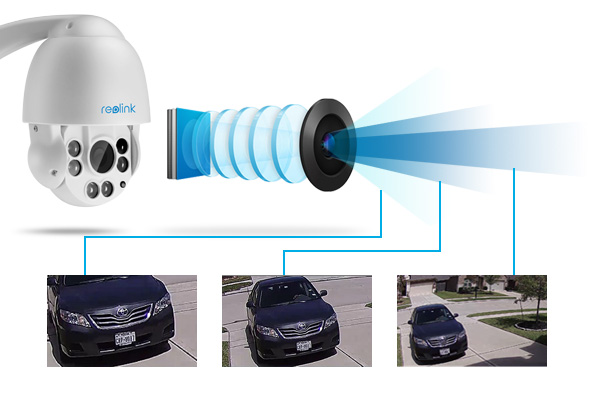
Varifocal lenses allow the focal length to be adjusted manually or automatically, providing flexibility in determining the field of view. They are ideal for scenarios where precise adjustments are needed, such as:
- Parking lots, where a wide-angle view can monitor entrances while a narrow view captures license plates.
- Warehouses, where focal lengths can be adjusted based on the layout.
Advantages:
- Versatile and adaptable to changing surveillance needs.
- Offers higher image detail at varying distances.
Limitations:
- More expensive than fixed lenses.
- Requires initial manual adjustment.
3. Zoom Lenses

Zoom lenses allow for magnification without compromising image quality. These lenses can either be motorized or manual, making them suitable for:
- Traffic monitoring, to zoom in on license plates or specific incidents.
- Event venues, where varying zoom levels may be required.
Advantages:
- Provides excellent detail in both wide and narrow fields of view.
- Highly effective for long-distance monitoring.
Limitations:
- Higher cost compared to fixed and varifocal lenses.
- Motorized options may require maintenance.
4. Wide-Angle Lenses
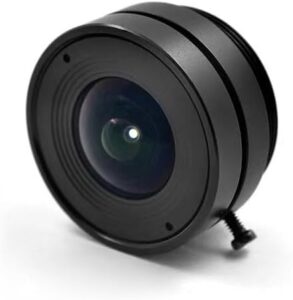
Wide-angle lenses feature a short focal length and provide a broad field of view, often exceeding 100 degrees. These lenses are perfect for:
- Elevators, to capture all corners.
- Retail floors, for maximum area coverage.
Advantages:
- Covers large areas with fewer cameras.
- Cost-efficient for expansive environments.
Limitations:
- Objects may appear smaller and less detailed.
- May introduce lens distortion.
5. Fish-Eye Lenses
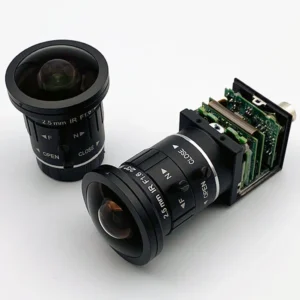
Fish-eye lenses provide an ultra-wide-angle view, often 180 degrees or more. They are widely used in:
- Banks, for panoramic surveillance.
- Stadiums, where a single camera can cover an entire section.
Advantages:
- Covers expansive areas with a single camera.
- Reduces blind spots.
Limitations:
- Distortion is significant and may require correction software.
- Limited to specific use cases.
6. Infrared (IR) Lenses
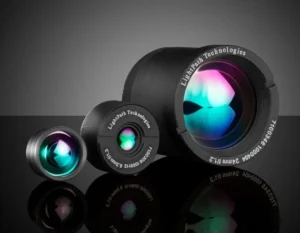
Infrared lenses are designed to work in low-light or no-light conditions by capturing infrared light. These are essential for:
- Outdoor surveillance at night.
- Storage units, where lighting may be limited.
Advantages:
- Provides clear footage in complete darkness.
- Ensures 24/7 surveillance.
Limitations:
- Can be more expensive than standard lenses.
- Requires a compatible camera.
Choosing the Right CCTV Lens
Selecting the right CCTV lens depends on several factors, including:
- Application: Define your surveillance objectives. Do you need to monitor a wide area or focus on specific details?
- Environment: Consider lighting conditions and distance from the subject.
- Budget: While advanced lenses offer more features, they also come at a higher cost.
Conclusion
The lens is an integral component of any CCTV system, determining the quality and effectiveness of surveillance. Whether you need fixed lenses for static monitoring or varifocal lenses for adaptability, choosing the right type is essential for achieving your security goals. By understanding the different types of lenses and their features, you can make an informed decision to enhance your CCTV system’s performance and reliability.